Free Heavy & Ultra-Bold Fonts 2026
Free heavy and ultra-bold fonts are the fastest way to make a headline, poster, or thumbnail punch through the noise—without burning your budget or fighting licensing fine print. This guide is written as one designer helping another pick the right heavy fonts for real-world work, not as another generic “50 best fonts” roundup.
Why this guide exists
Most “bold font” lists mix light bolds with true heavyweight faces, skip licensing clarity, and never tell you whena font actually works. This article fixes three things:
- Clear weight focus: Only heavy and ultra-bold fonts that can genuinely carry a headline or poster.
- Scoped, curated set: 30 fonts, all free, all checked as of January 2026, organized by sans, serif, slab, and display.
- Real scenarios: Every font here gets a specific “best for” and a real-world way you’d actually use it.
Reader intent (from research): you searched for free heavy and ultra-bold fonts because you want:
- Fonts that hit hard on posters, hero sections, and thumbnails.
- Fonts that are free and safe to use commercially (Google Fonts, Fontshare, GitHub, etc.).
- Clear guidance on what to use where, instead of scrolling endless font directories.
What’s the difference between bold, heavy, and ultra-bold fonts?
Heavy and ultra-bold fonts sit at the top end of the weight range and are designed for impact, not paragraph text. Bold fonts typically sit around weight 600–700 and are ideal for emphasis inside body copy, while heavy and ultra-bold weights (700–900) have thicker strokes meant for headlines, hero text, logos, and posters. When you push into these weights, you gain attention but start to lose legibility if you cram too much text or use them at small sizes.
Key takeaways:
- Use bold (600–700) for emphasis inside body copy or UI labels.
- Use heavy/ultra-bold (700–900) for headlines, logos, and short phrases.
- Keep heavy fonts big—posters, banners, hero sections, thumbnails.
- Avoid heavy weights for long paragraphs; they fatigue the eye quickly.
- When in doubt, combine a heavy headline with a regular-weight body font from the same family.
Who this guide is for (and who should skip it)
Use this guide if you:
- Design posters, hero sections, landing pages, or thumbnails and need free fonts that actually hit hard.
- Want clear licensing (Google Fonts, Fontshare, GitHub, reputable foundries) and want to avoid legal grey zones.
- Get decision fatigue from huge “100 best fonts” posts and just want a tested short list.
You can probably skip this if you:
- Are looking for subtle text fonts for long-form reading.
- Need highly specialized type (Arabic, Devanagari, or custom brand systems).
- I already own a professional type library and just want niche foundry recommendations.
Common mistakes this guide helps you avoid:
- Picking a “bold” font that looks timid when scaled to a billboard.
- Using ultra-heavy display fonts for body text and ending up with unreadable layouts.
- Grabbing fonts from random download sites with unclear licensing or outdated files.
Free Heavy & Ultra-Bold Fonts — Our Curated Recommendations
Tiering:
- Tier 1 – Featured picks: The workhorse heavy fonts most designers can rely on first.
- Tier 2 – Core fonts: Solid everyday options once you know what you like.
- Tier 3 – Specialist fonts: Characterful, niche, or stylistically strong choices for specific aesthetics.
See also
Tier 1 – Featured Picks
Geist (Vercel)
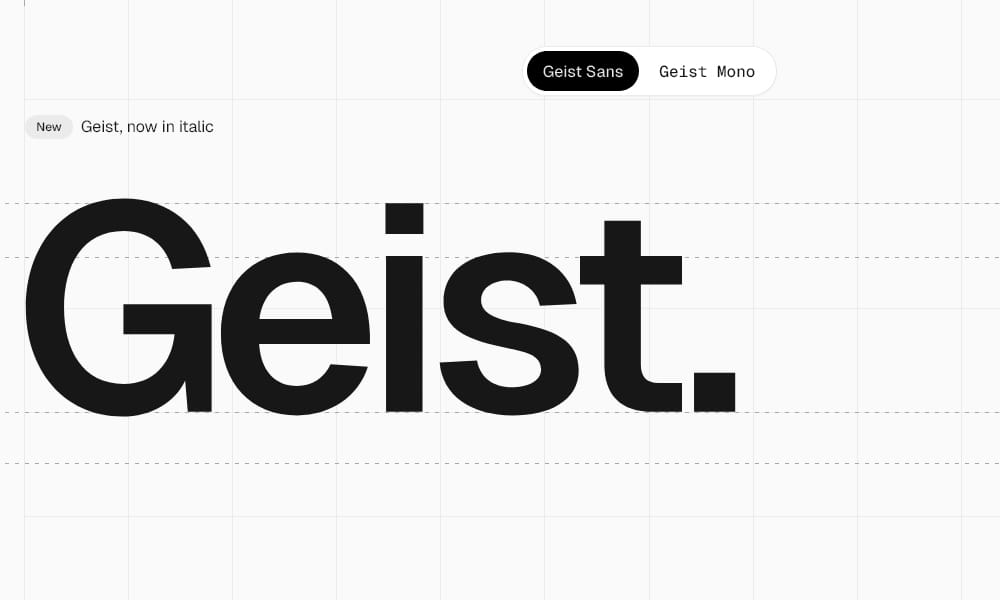
Geist is the modern, neutral heavy sans that feels like it was designed for 2026 product interfaces and landing pages—because it was. Vercel ships it as the default font for its ecosystem, and that alone tells you it’s engineered to survive real UI constraints: tight grids, dark themes, and tiny viewports. If you want a single heavy font family that can jump from product site to editor UI to marketing hero, start here.
Key features:
- Full family with weights up to 900 plus a variable font file.
- Designed for the web: clean shapes, excellent hinting, predictable spacing.
- Open-source on GitHub with active releases and CI (you know it won’t disappear).
- Pairs well with itself: heavy for headings, regular/medium for body.
Best for: SaaS marketing sites, dashboards, and modern landing pages where you want impact without drawing attention to the typeface.
Pricing block (FREE):
— Cost: Free
— Main limitations: No “quirky personality”; very neutral, so not ideal for expressive brands.
— Best for: Product and interface work that needs reliable heavy sans.
— Last Updated: September 2025 (v1.3.1 on GitHub).
Real-world insight: If your brand is already using Inter, Satoshi, or similar, Geist lets you upgrade to a heavier, more contemporary feel without visually clashing with your existing UI patterns.
Bricolage Grotesque (Atelier Triay)
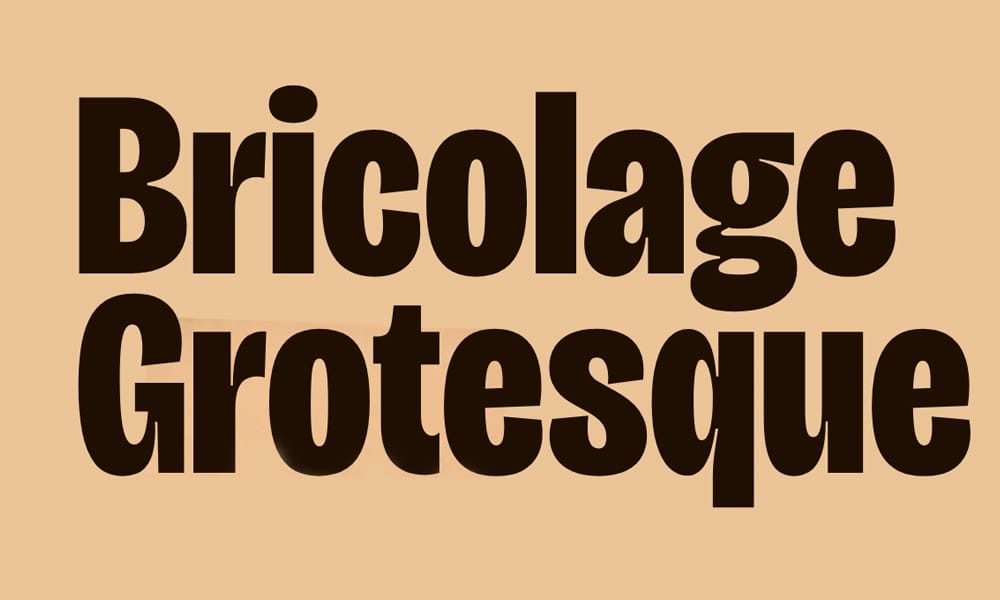
Bricolage Grotesque is what happens when you take a workhorse grotesk and give it just enough personality to stand out at huge sizes. It’s variable, covers a huge weight range, and its heavier cuts feel punchy without going cartoony. Think editorial hero, product launch landing page, or typographic posters that need a little character.
Key features:
- Variable font with multiple axes (weight and optical size).
- Heavy and ultra-bold weights with open counters for legibility.
- Free for commercial use via Fontshare / open licensing.
- Strong in all-caps headlines and short phrases.
Best for: Designers who want a heavy grotesk with more warmth than Geist for brand campaigns, landing-page heroes, and expressive UI headings.
Pricing block (FREE):
— Cost: Free
— Main Limitations: Quirkier shapes can feel off in conservative corporate brands.
— Best for: Editorial and marketing-heavy work, not minimalist enterprise dashboards.
— Last Updated: September 2025 (Fontsource / Fontshare metadata).
Real-world insight: Unlike many “loud” heavy grotesks, Bricolage still tracks well in Figma and web layouts; you can tighten letter-spacing without letters mashing together—handy for tight hero layouts.
ChunkFive (The League of Moveable Type)
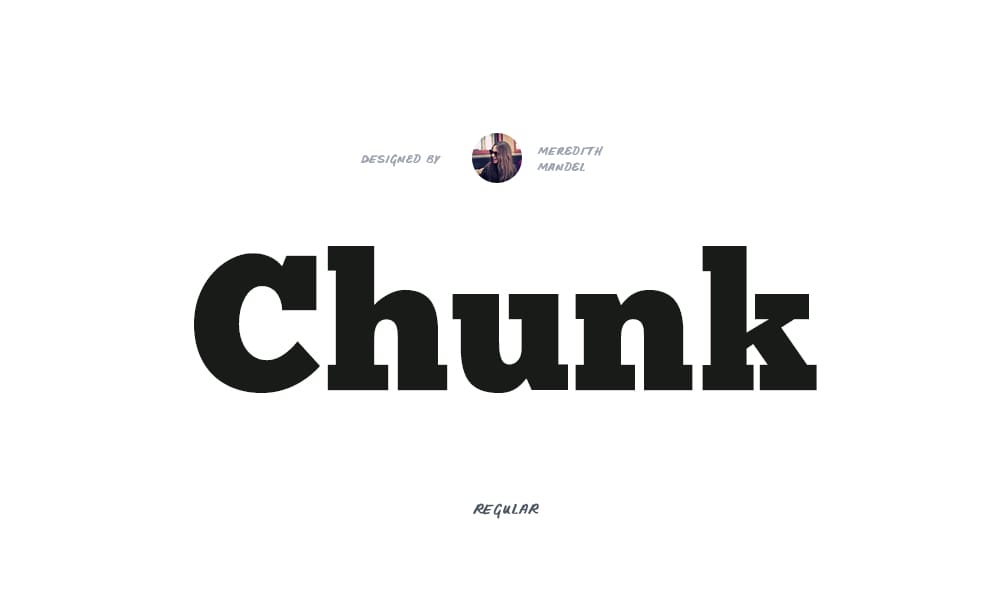
ChunkFive is the classic ultra-bold slab serif everyone still talks about because it simply refuses to go out of fashion. You reach for it when you want a poster, banner, or hero that says, “This is the message, no negotiation.” The big slabs and heavy weight were designed for print, but they still work beautifully on digital displays.
Key features:
- Ultra-heavy slab serif designed explicitly for attention-grabbing headlines.
- Open-source license from a trusted indie foundry.
- Recognizable personality—retro but not kitsch.
- Works well on both light and dark backgrounds at large sizes.
Best for: Event posters, big sale banners, campaign landers where subtlety is the enemy.
Pricing block (FREE):
— Cost: Free
— Main Limitations: Too loud and chunky for UI or body use; keep it for big headlines only.
— Best for: Posters and hero statements over ~60px, especially with short phrases.
— Last Updated: October 2024 (recent package refresh on distribution sites).
Real-world insight: Treat ChunkFive like a spotlight, not a paint roller—one or two words in Chunk with a calmer sans underneath gives you punch andpolish.
Fraunces (Undercase Type)
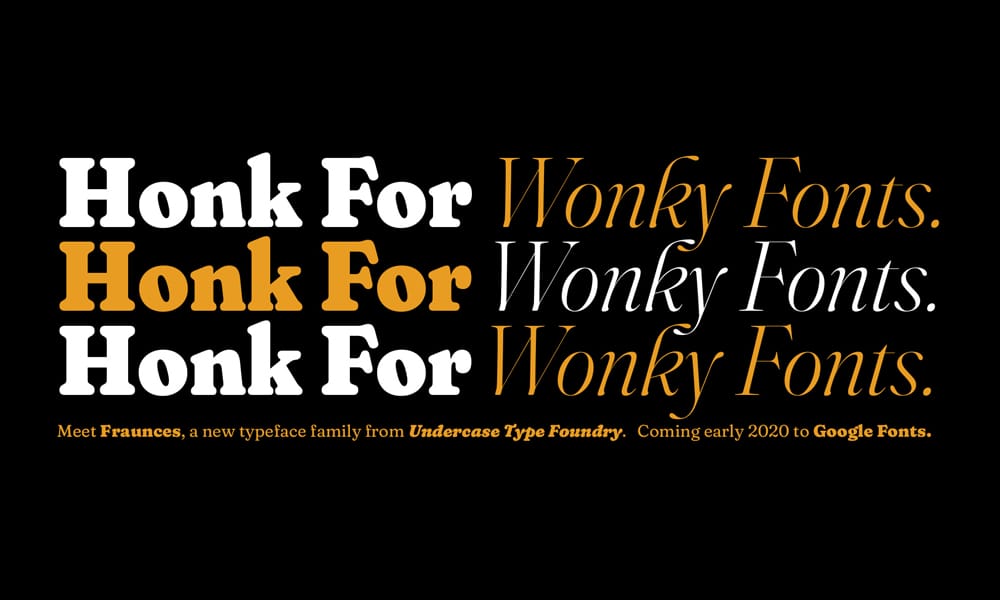
Fraunces is a variable “soft-serve” display serif: part editorial, part expressive, and very good when you need classy but heavy headlines. It shines in luxury branding, packaging, and hero text for anything artisan or high-end; the heavier settings feel substantial without going brutish.
Key features:
- Variable font with weight and optical size axes.
- Heavy cuts that keep fine details for high-resolution displays.
- Open-source via GitHub with ongoing work.
- Pairs beautifully with neutral sans like Geist or General Sans.
Best for: Premium brands, editorial sites, coffee/wine/beauty packaging, and marketing pages that need typographic character and weight.
Pricing block (FREE):
— Cost: Free
— Main Limitations: Too stylized for minimal or tech-first brands.
— Best for: Design systems where headlines need personality and supporting text stays neutral.
— Last Updated: 2024 (fraunces GitHub repo).
Real-world insight: Fraunces can get noisy if you overdo tracking; keep letter-spacing neutral and let the curves breathe—especially at ultra-bold settings.
Besley (Indestructible Type)
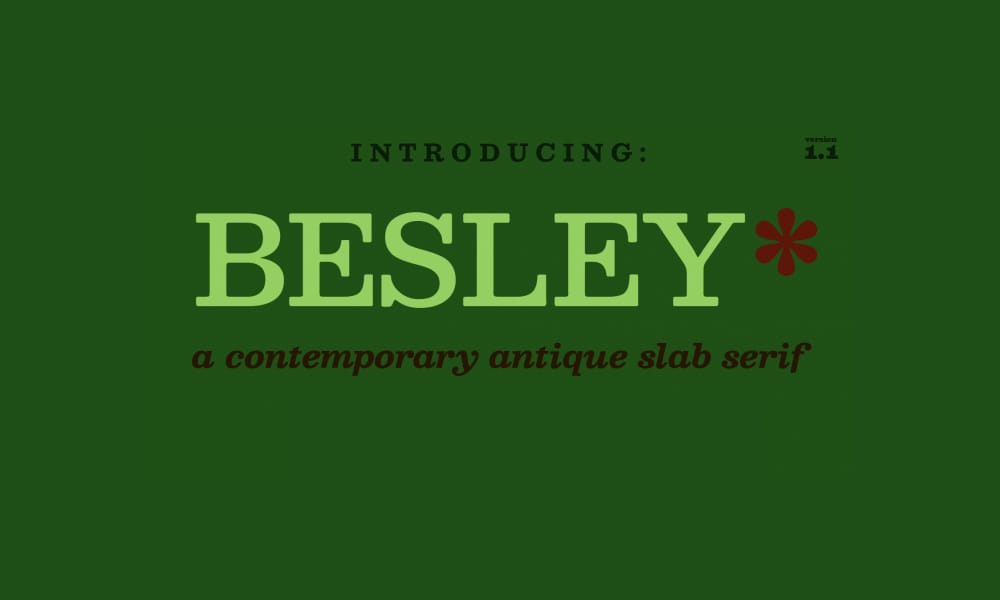
Besley is a robust slab serif designed as a modern reinterpretation of 19th-century Clarendon-style faces, with a variable version that includes fatface weights. It’s one of those rare “serif but still friendly” options that can go very heavy while staying legible, especially on posters and print.
Key features:
- Variable font with a dedicated fatface-style weight suitable for ultra-bold headings.
- Open-source, actively maintained, with extensive documentation.
- Great legibility thanks to big x-height and sturdy forms.
- Works across print and digital without feeling like a novelty.
Best for: Designers who want a heavy serif that can cover both branding and editorial in the same family.
Pricing block (FREE):
— Cost: Free
— Main Limitations: Not as “slick” as geometric sans; brings a more traditional tone.
— Best for: Branding systems where a single serif family needs to cover many roles.
— Last Updated: December 2024 (Indestructible Type site).
Real-world insight: If you’re tempted to use Abril Fatface but worry it’s too dramatic, Besley’s heavier cuts are a safer, more flexible choice for long-lived brands.
Tier 2 – Core Heavy & Ultra-Bold Workhorses
General Sans (Fontshare)
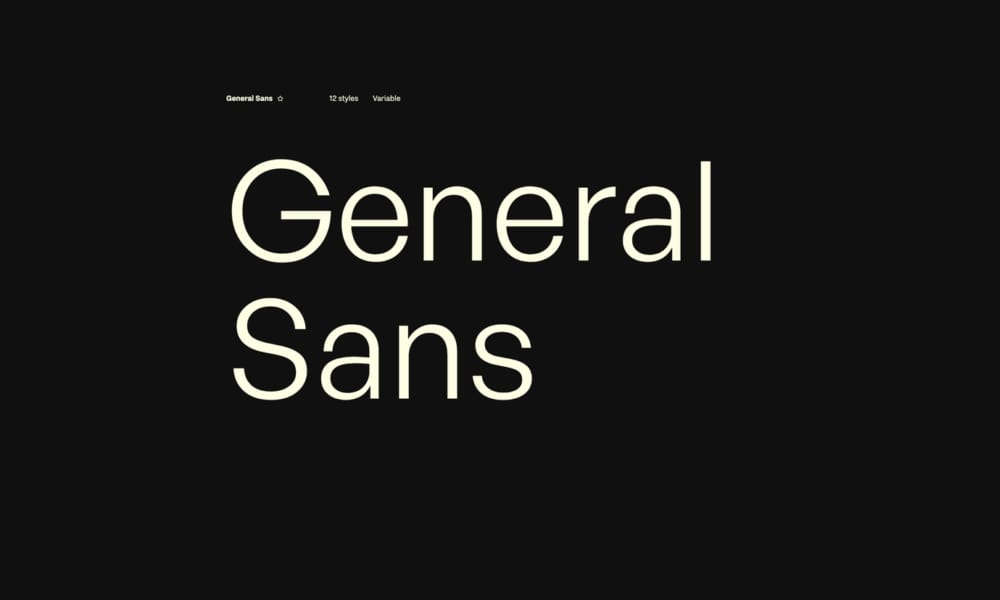
General Sans is a rationalist sans that slots neatly between utilitarian and friendly, with bold and extra-bold cuts that hold up at headline sizes. It’s ideal when you want a more human alternative to Inter or Roboto for UI and marketing.
Key features:
- 12 styles plus a variable font for fine-tuning weight.
- Strong bold/extra-bold styles that remain sharp on small screens.
- Free for commercial use via Fontshare/ITF license.
- Works equally well in product UI and marketing.
Best for: Product and marketing teams that want a single, modern sans spanning body copy and heavy headings.
Pricing block (FREE):
— Cost: Free
— Main Limitations: Less distinctive than Bricolage; not for highly expressive brand voices.
— Best for: UI-heavy teams and SaaS products.
— Last Updated: 2024 (Fontshare metadata).
Usage insight: Use the variable font version and nudge the weight slightly above 700 for “pseudo custom” heaviness without committing to a full black cut.
The Bold Font (DaFont)
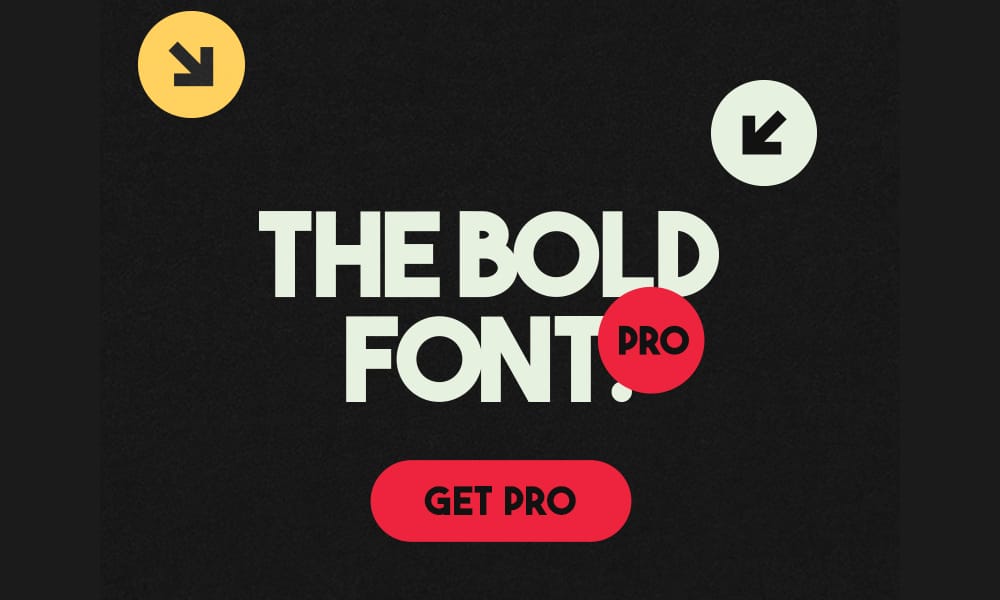
The Bold Font is exactly what it sounds like: a straightforward, ultra-heavy sans designed to yell your message. It’s not subtle, but for big poster headlines, social graphics, or a bold wordmark, it does the job with zero fuss.
Key features:
- Very heavy, condensed sans suited to short phrases.
- Simple shapes that survive low-res environments and print.
- Freely downloadable from DaFont-style directories (check license per project).
- Works well in all caps for maximum punch.
Best for: One-line headlines, social posts, and quick-turn graphics where nuance doesn’t matter as much as volume.
Pricing block (FREE / CHECK LICENSE):
— Cost: Free (personal; check commercial terms on the official page).
— Main Limitations: Licensing is less clearly documented than Google/Fontshare fonts; avoid for high-risk commercial clients.
— Best for: Personal projects, quick posters, or concept mocks.
— Last Updated: Listed as current on third-party directories as of 2025.
Usage insight: Treat this as a “stunt” font—great for a big campaign headline, but don’t build an entire brand system on it unless you have rock-solid licensing confirmation.
Chillax (Fontshare)
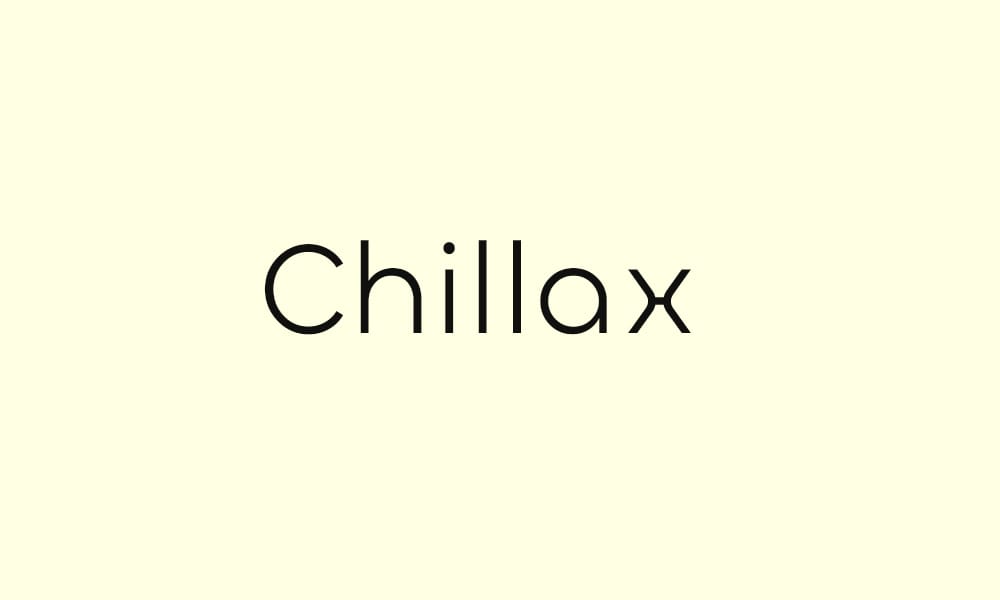
Chillax mixes a geometric skeleton with soft, Bauhaus-inspired details, and the heavy weights feel both playful and assertive. If you design for lifestyle, youth, or creator brands, this is a strong alternative to the usual Futura-inspired suspects.
Key features:
- Multiple weights, including a solid bold for headlines.
- Geometric but relaxed; works great for lifestyle and casual tech.
- Free commercial license via Fontshare.
- Pairs nicely with more neutral text faces.
Best for: Lifestyle brands, creator landing pages, and campaigns targeting younger audiences.
Pricing block (FREE):
— Cost: Free
— Main Limitations: Too “friendly” for conservative corporate interfaces.
— Best for: Brand and campaign visuals that need warmth and modernity.
— Last Updated: July 2024 (recent distribution updates).
Usage insight: Use Chillax bold for headings and a neutral serif or sans for body; using Chillax everywhere can make longer pages feel slightly toy-like.
Fredoka (Milena Brandao)
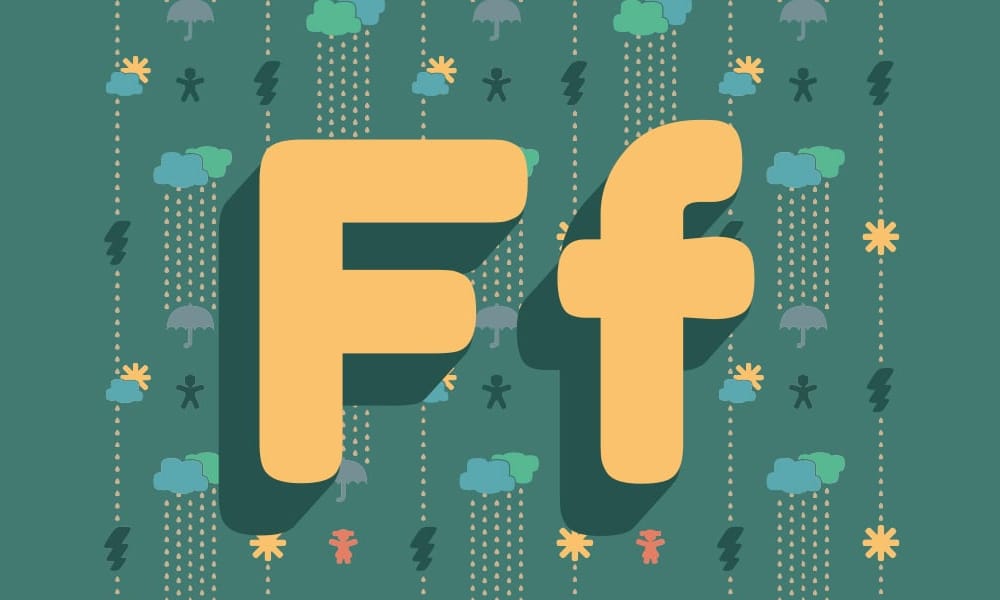
Fredoka is a rounded, bubble-like sans that leans more towards playful branding and kid-friendly layouts than strict corporate UI. Its heavier styles are ideal for packaging, children’s products, and friendly onboarding screens.
Key features:
- Heavy rounded shapes that feel approachable and soft.
- Well-suited to large sizes and simple messages.
- Typically licensed as free (often via Google Fonts under Fredoka One variants).
- Strongly recognisable at a glance.
Best for: Kids’ products, playful apps, and friendly onboarding flows.
Pricing block (FREE / CHECK SOURCE):
— Cost: Free (verify licensing on the official download page).
— Main Limitations: Overused in some niches and too informal for serious brands.
— Best for: Short cheerful headlines, not long-form UI.
— Last Updated: 2024 across various directories.
Usage insight: Reserve Fredoka heavy for one or two key touchpoints (like CTAs or hero headings); used everywhere, it quickly makes interfaces feel childish.
Raleway (The League of Moveable Type / Google Fonts)
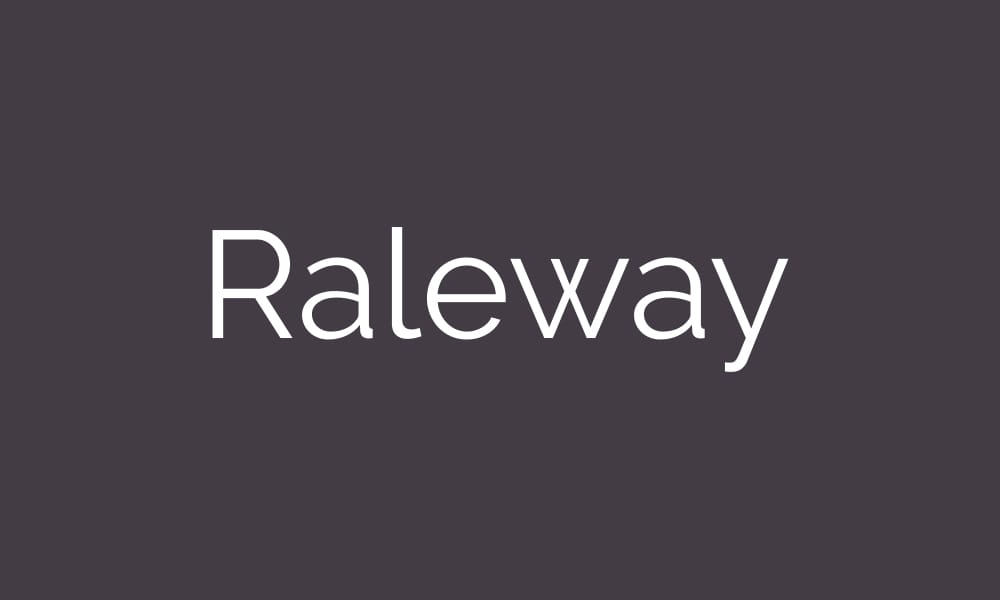
Raleway started life as a single thin weight but has grown into a full family with bold, extra-bold, and black weights that can hold their own as display styles. The heavier cuts are elegant rather than brutish, so they work especially well for modern, minimal brands.
Key features:
- 9 weights from thin to black on Google Fonts.
- ExtraBold and Black weights that feel substantial but refined.
- Open-source OFL license.
- Good multilingual coverage for web usage.
Best for: Minimal branding, portfolios, and editorial layouts where you want a heavy heading without a “shouting” vibe.
Pricing block (FREE):
— Cost: Free
— Main Limitations: At very small sizes, heavy weights can feel cramped; keep them for headings.
— Best for: Subtle, modern heavy headings in clean layouts.
— Last Updated: 2024 on major distribution platforms.
Usage insight: Designers often try to push Raleway’s bold weights into small UI labels; don’t—stick to regular or medium in UI and save ExtraBold/Black for hero and section headings.
Clash Grotesk (Fontshare)
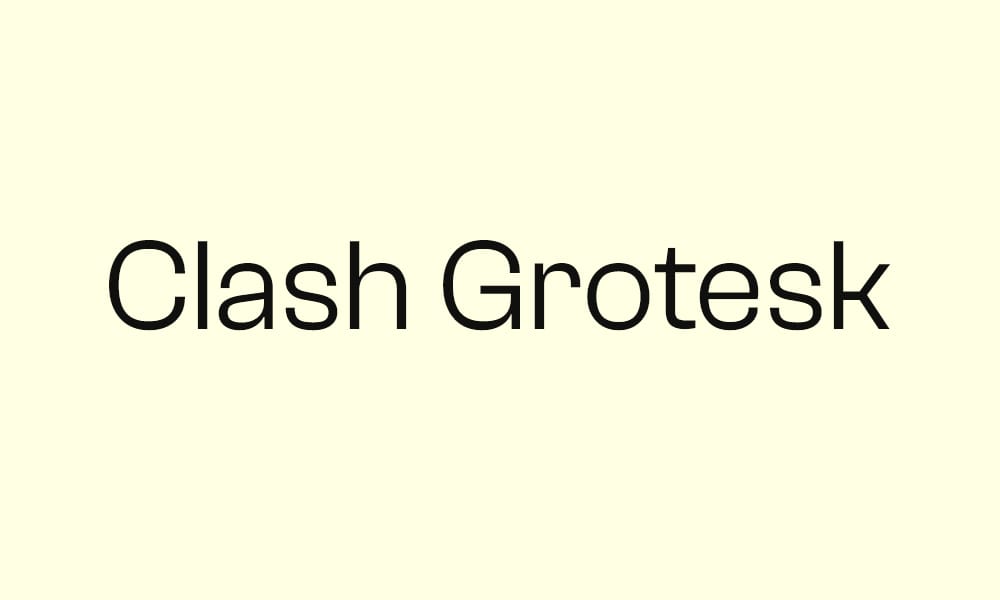
Clash Grotesk is a contemporary neo-grotesk that’s more characterful than system fonts but still highly usable. Its bold weight feels assertive without being as extreme as ChunkFive or Free Fat Font.
Key features:
- Six weights from ExtraLight to Bold.
- Clean grotesk character with a little edge.
- Free commercial license via Fontshare.
- Good fit for interface headings and branding.
Best for: Brands that want a fresh, heavy grotesk but don’t want to jump all the way into ultra-display territory.
Pricing block (FREE):
— Cost: Free
— Main Limitations: Bold is heavy enough for headings, but you won’t get “ultra-bold stunt” levels; that’s by design.
— Best for: Headings and subheadings in clean web design.
— Last Updated: Late 2024.
Usage insight: Clash Grotesk’s bold pairs surprisingly well with serif display fonts like Abril Fatface or Fraunces, especially in editorial-style layouts.
Oswald (Vernon Adams / Google Fonts)
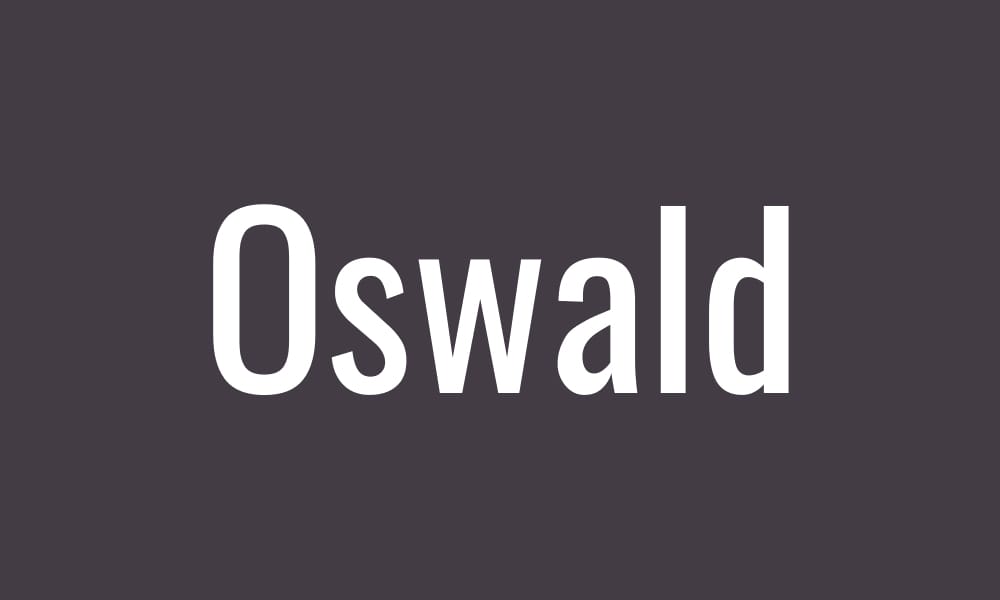
Oswald is a reworking of the classic Alternate Gothic style; its heavier weights are condensed, loud, and perfect when horizontal space is tight. You see it everywhere from posters to thumbnails for a reason: it delivers big, bold text in narrow spaces.
Key features:
- Multiple weights including Heavy/ExtraBold across platforms.
- Condensed forms ideal for long words in tight layouts.
- Open-source OFL license.
- Widely supported and battle-tested on the web.
Best for: Banners, YouTube thumbnails, and hero sections where you need large text but don’t have much width.
Pricing block (FREE):
— Cost: Free
— Main Limitations: Long passages in heavy weights become fatiguing quickly; keep it to short headers.
— Best for: Bold, condensed headings and short taglines.
— Last Updated: 2024 on Google Fonts and Adobe Fonts.
Usage insight: Many designers over-tighten Oswald tracking; let it breathe a bit or it starts to feel like a wall of bars rather than letterforms.
Tier 3 – Specialist Heavy & Ultra-Bold Fonts
Below are the remaining curated fonts, each with a focused use case. These are the ones you reach for when you need a specific mood or genre.
Arvo (1001 Fonts / Google Fonts)
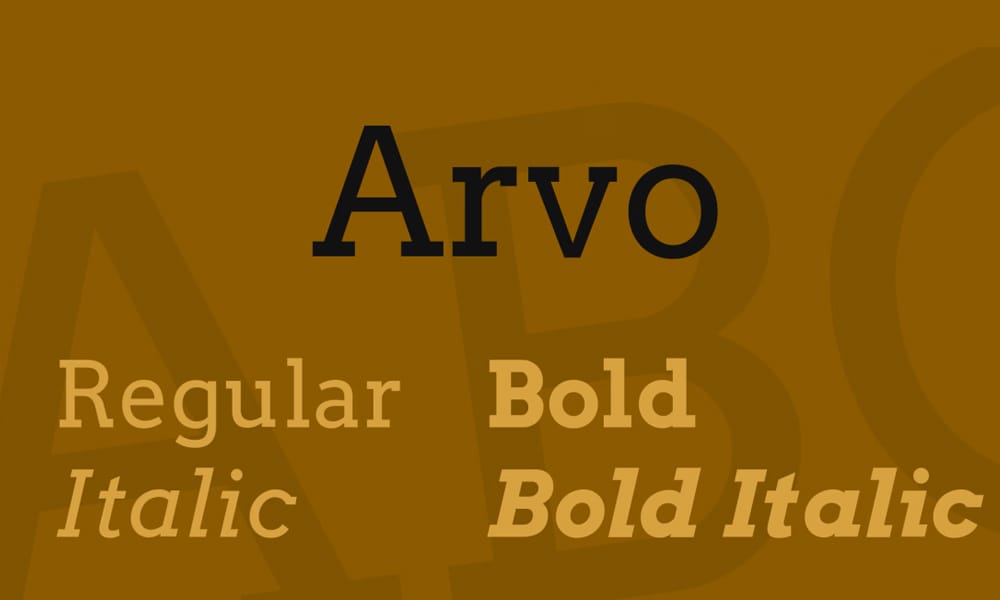
Arvo is a geometric slab serif where the bold weight feels sturdy, making it a good bridge between body text and display. It works especially well in data-heavy dashboards and editorial where slab serifs can organize content without feeling too old-fashioned.
Key features:
- Strong bold slab with square terminals.
- Good readability at mid sizes.
- Open license on most major font sites.
Best for: Dashboards, infographics, and UI sections that need just a touch of personality.
Pricing block (FREE):
— Cost: Free
— Main Limitations: Not a true ultra-bold; use it when you need firmness, not maximum drama.
— Best for: Strong subheadings and pull quotes.
— Last Updated: 2024 distribution refresh.
Usage insight: Arvo bold is a good fallback when you want a slab but find ChunkFive too loud for your layout.
Abril Fatface
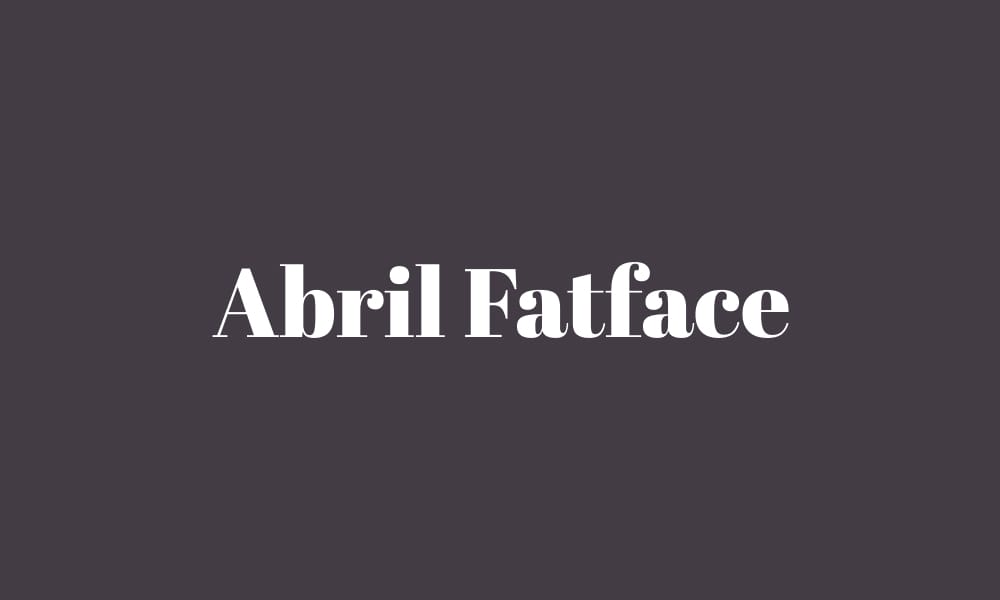
Abril Fatface is a classic ultra-bold display serif inspired by 19th-century advertising posters. It’s dramatic, high-contrast, and unapologetically loud, which makes it perfect for fashion, editorial, and luxury brands.
Key features:
- Single ultra-bold display cut with strong contrast.
- Great for large headlines and magazine-style layouts.
- Open license via Google Fonts / Font Squirrel.
Best for: Fashion and editorial hero headings, cover-type layouts.
Pricing block (FREE):
— Cost: Free
— Main Limitations: Too decorative for dense text or small sizes; can feel cliché if overused.
— Best for: Occasional hero headlines, not entire systems.
— Last Updated: 2024.
Usage insight: Combine Abril Fatface with a super-clean sans like Geist/General Sans to avoid tipping into “overdesigned” territory.
Yeseva One (Fontsquirrel / Google Fonts)
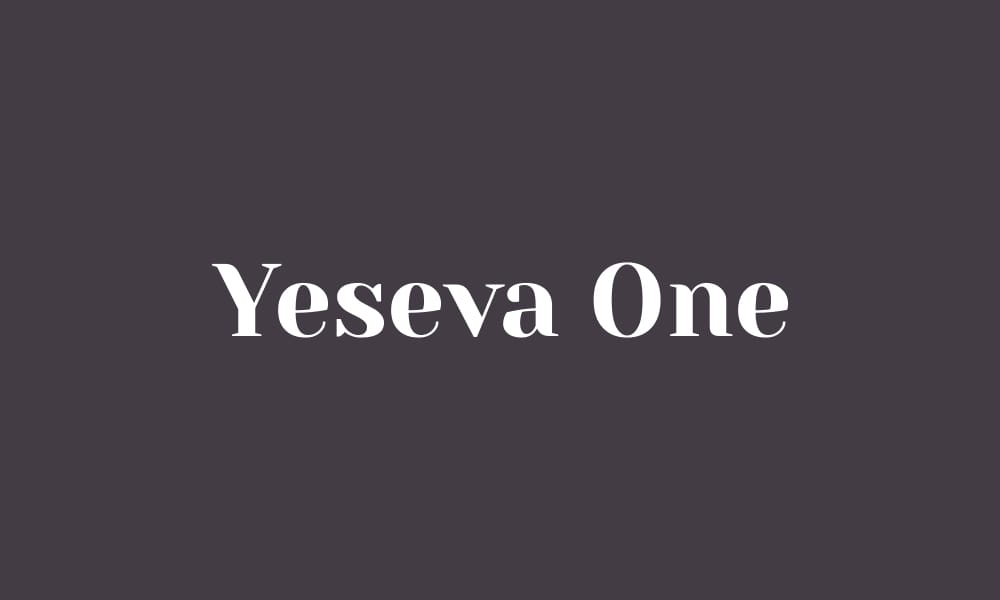
Yeseva One is a heavy serif with a hand-crafted, slightly romantic feel. It’s not as overtly “fashion” as Abril Fatface, making it a good alternative for lifestyle sites and wedding/event brands.
Key features:
- Heavy display serif with distinctive terminals.
- Great for logos and headings with character.
- Available on Google Fonts with an open license.
Best for: Wedding brands, lifestyle blogs, and boutique businesses.
Pricing block (FREE):
— Cost: Free
— Main Limitations: Lower legibility at small sizes; keep it big and sparse.
— Best for: Logos and hero headings rather than UI text.
— Last Updated: 2023–2024 on major platforms.
Usage insight: Use Yeseva One for your brand logotype and keep the rest of the site in a calmer sans/serif pairing so the logo remains special.
Bespoke Serif (Fontshare)
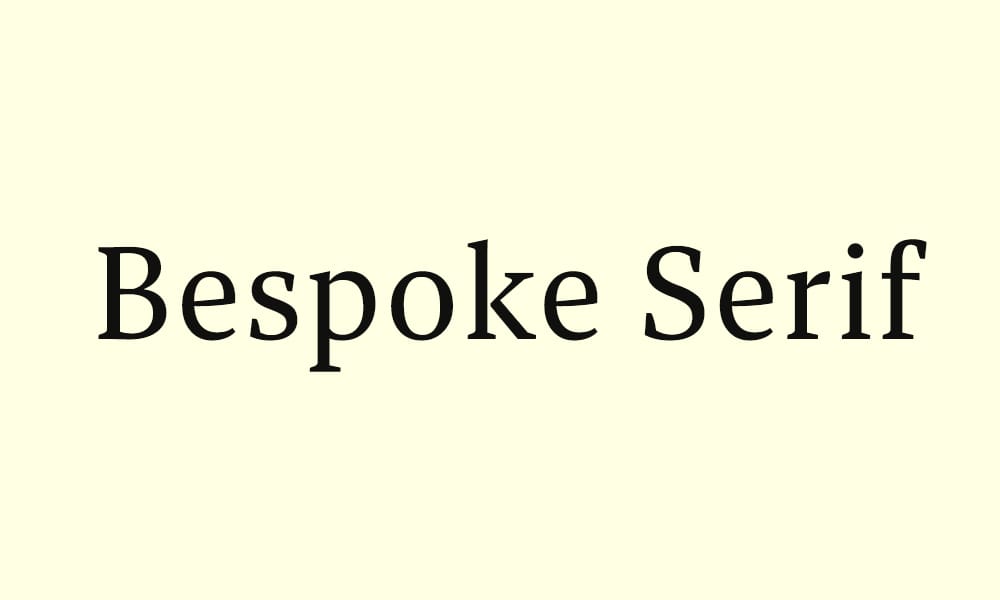
Bespoke Serif is a modern display serif with strong, stylised forms, designed for branding and editorial where type carries the identity. Its heavier cuts are excellent for logotypes and section titles.
Key features:
- Multiple weights focused on display use.
- Free for commercial use via Fontshare.
- Strong vertical stress gives it a contemporary editorial look.
Best for: Brand identities, editorial landing pages, and case study headlines.
Pricing block (FREE):
— Cost: Free
— Main Limitations: Too stylised for dense, functional UI text.
— Best for: Logo systems and key marketing headlines.
— Last Updated: 2024.
Usage insight: Use Bespoke Serif for key brand marks and pair it with General Sans or Clash Grotesk for everything else to keep the system coherent.
Castoro Titling (Tiro Typeworks)
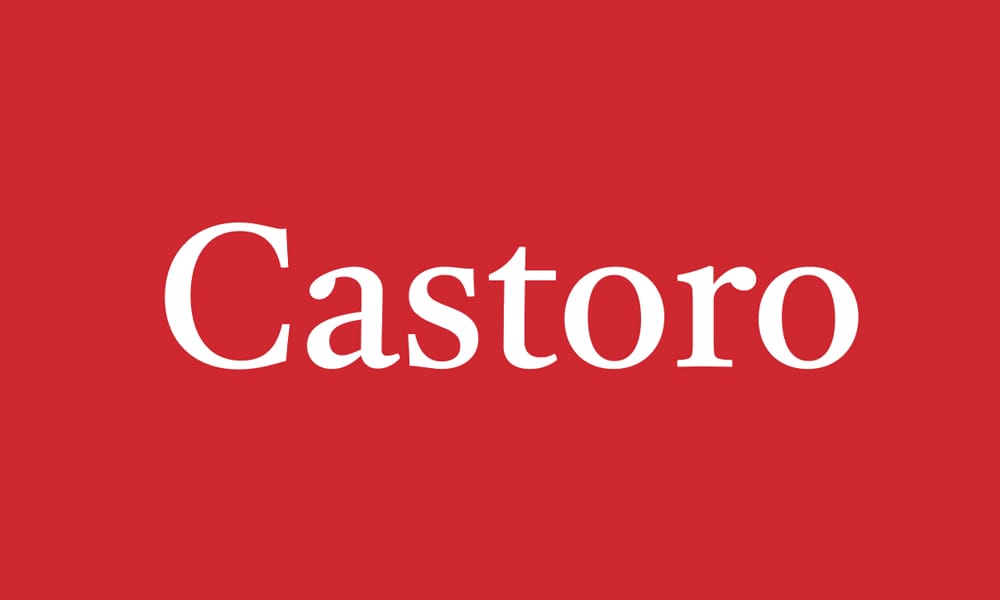
Castoro Titling is a titling serif designed for headings and display use, often delivered alongside the Castoro text family. The heavier titling styles make a solid choice when you want something classical without going full fatface.
Key features:
- Titling-focused design optimised for large sizes.
- Open-source on GitHub with active maintenance.
- Good match with the Castoro text family for long-form content.
Best for: Article headers, documentation sites, and academic landing pages.
Pricing block (FREE):
— Cost: Free
— Main Limitations: Less dramatically heavy than the ultra-bold display faces here; use for serious tone.
— Best for: Substantial, text-led sites where a classic serif heading feels right.
— Last Updated: 2023–2024.
Usage insight: If you’re designing documentation or blog platforms, Castoro Titling + Castoro body gives you a professional, open-source stack end to end.
Chintzy Font (ZT Chintzy Heavy)
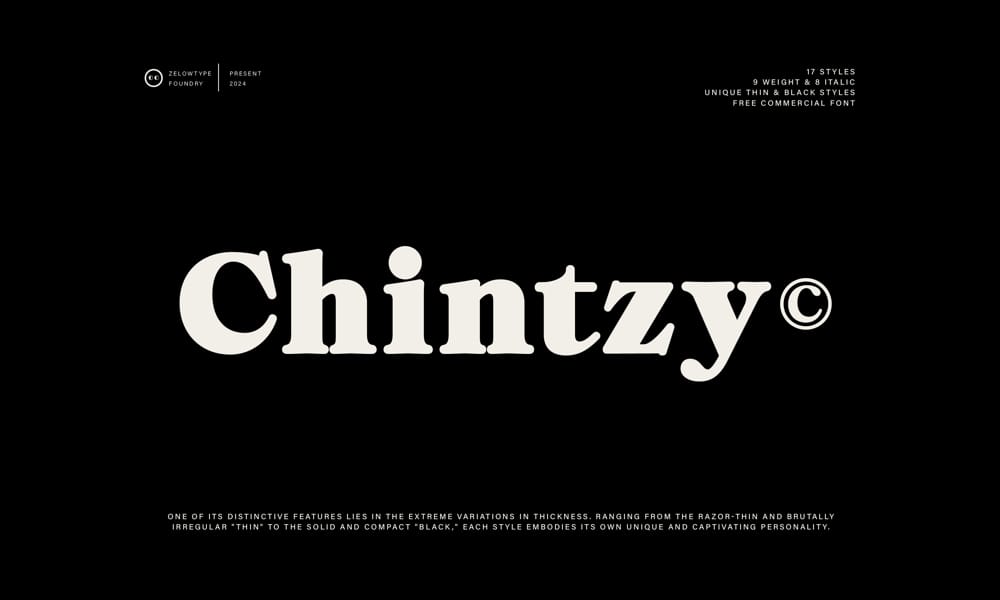
Chintzy Heavy is a playful, ultra-bold display serif with chunky, irregular shapes. It’s not a daily driver, but when you need to inject whimsy into a poster or header, it works.
Key features:
- Very heavy, characterful serif forms.
- Good for short, expressive words.
- Available through font directories like Fontspace.
Best for: Event posters, social graphics, and experimental layouts.
Pricing block (FREE / CHECK LICENSE):
— Cost: Free (verify license for commercial uses).
— Main Limitations: Highly stylised; quickly dominates a composition.
— Best for: One or two focal words.
— Last Updated: Listed as current on directories as of 2025.
Usage insight: Use Chintzy Heavy alongside a very plain body font; trying to pair it with other loud styles creates visual chaos.
Aleo (GitHub / Various)
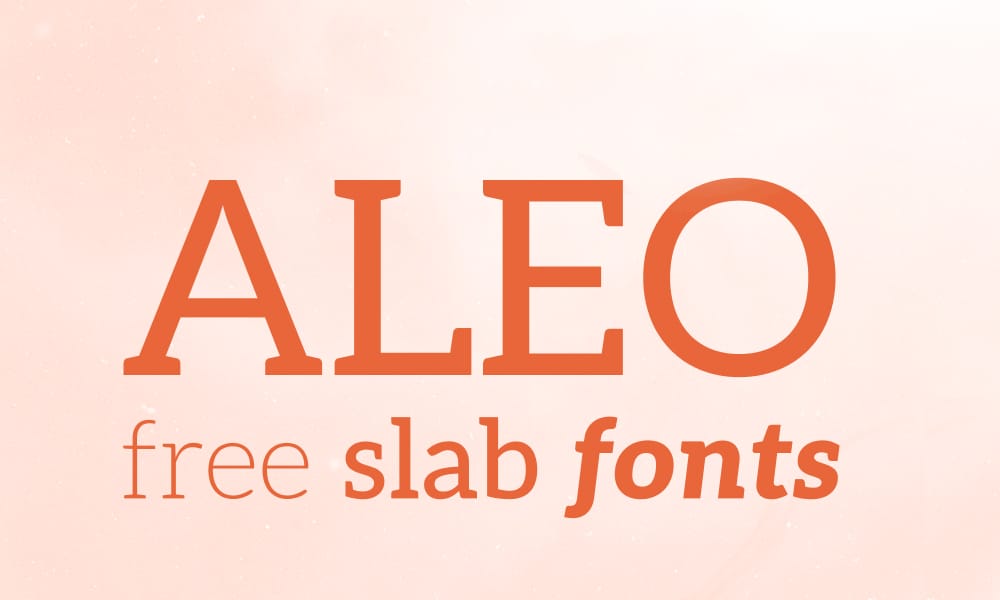
Aleo is a slab serif companion to Lato with a modern feel and a reliable bold weight. It’s less dramatic than ChunkFive but far more usable in everyday UI and editorial.
Key features:
- Solid bold slab weight.
- Designed to balance readability with character.
- Open license and widely available.
Best for: Interfaces and editorial where you want hints of slab personality without full-on poster drama.
Pricing block (FREE):
— Cost: Free
— Main Limitations: Don’t reach ultra-bold territory; you’re getting firmness, not maximum impact.
— Best for: Subheads and UI labels that need a bit more authority.
— Last Updated: 2023–2024.
Usage insight: Swap Aleo bold in wherever you’d otherwise default to Roboto Slab—your layouts will instantly feel a bit more individual.
Zilla Slab (Mozilla)
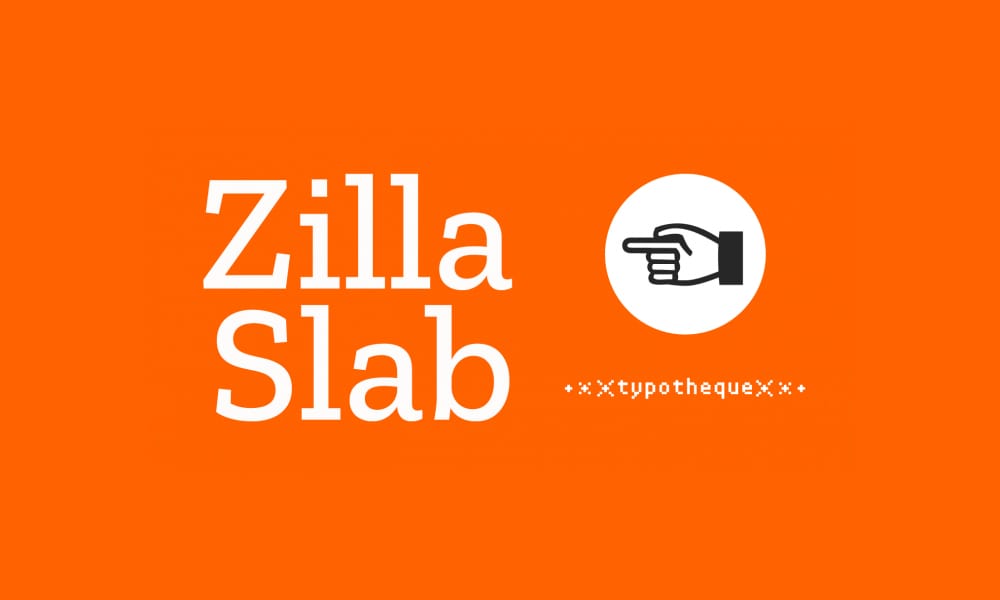
Zilla Slab is Mozilla’s open-source slab serif family, used in branding and interfaces alike. Its bold cut hits a sweet spot between corporate and expressive.
Key features:
- Bold slab that works in both headings and shorter text.
- Open-source and well maintained by Mozilla.
- Good match with modern sans for UI work.
Best for: Tech brands and documentation that want more character than a generic sans serif, without losing clarity.
Pricing block (FREE):
— Cost: Free
— Main Limitations: Less dramatic than pure display slabs; not your top pick for loud posters.
— Best for: Documentation, product sites, and tech marketing.
— Last Updated: 2024.
Usage insight: Zilla Slab bold is a great way to introduce a typographic “accent” in otherwise very neutral tech branding.
Funnel Display (Dicotype)
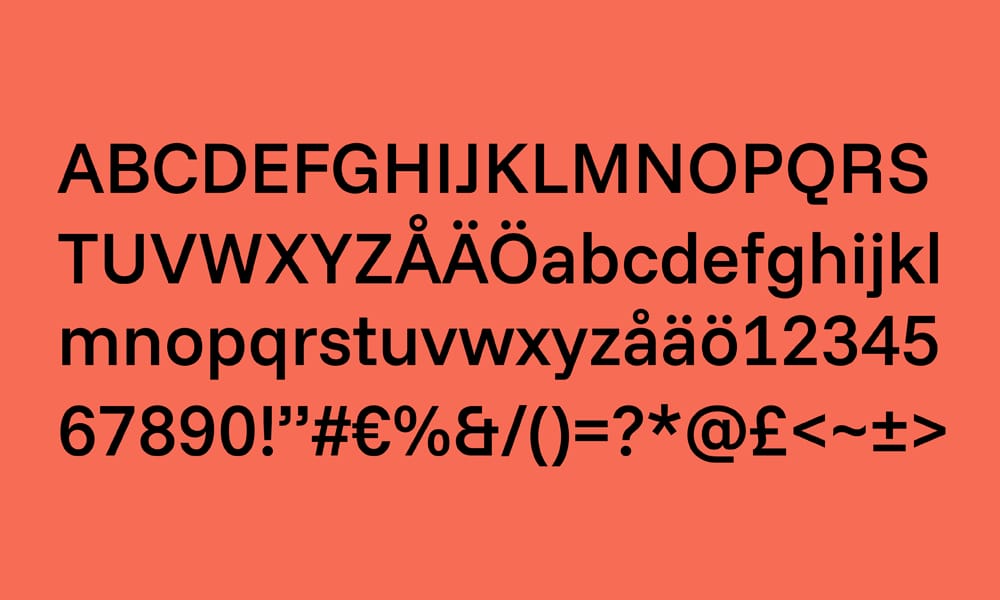
Funnel Display is a modern display face from Dicotype built with heavy, attention-grabbing styles. It’s best when you want a digital-first, contemporary voice rather than retro or print-inspired.
Key features:
- Heavy display weights with strong geometry.
- Open-source on GitHub.
- Works best in short headings and hero text.
Best for: Startup landing pages, digital campaigns, and tech event posters.
Pricing block (FREE):
— Cost: Free
— Main Limitations: Too sharp and loud for long-form reading.
— Best for: Heavy display use only.
— Last Updated: 2024.
Usage insight: Funnel Display shines in single, bold statements; paired with a very calm sans for body text so the hero type remains the star.
Ultra (Google Fonts)
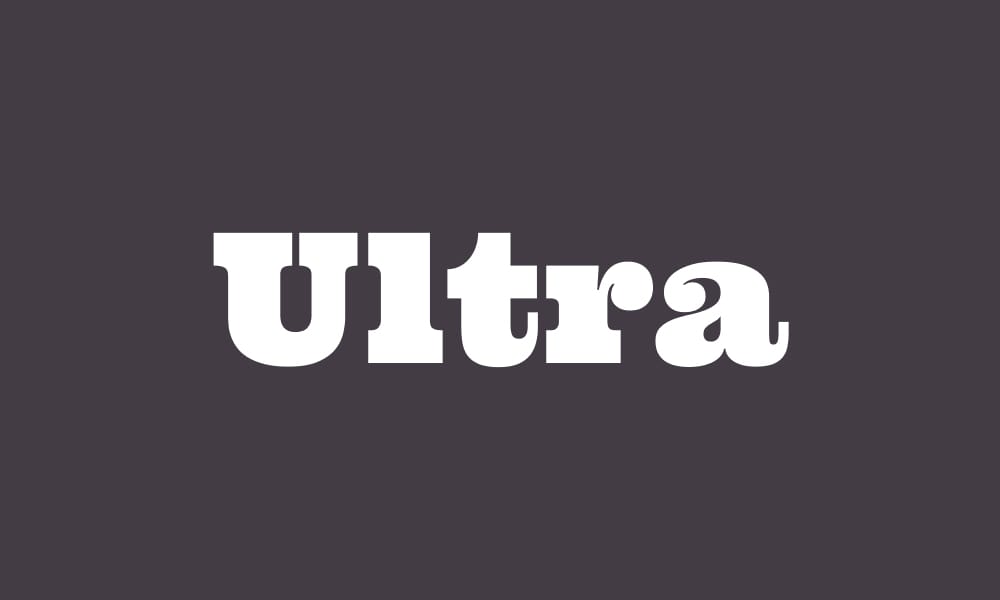
Ultra is an ultra-bold slab with roots in traditional wood-type Clarendon styles. It’s chunky, serious, and designed specifically for titling.
Key features:
- Extremely heavy slab serif weight.
- Designed for large sizes and big headlines.
- Live on Google Fonts with an OFL license.
Best for: Old-school, poster-style headlines, especially with short nouns or numbers.
Pricing block (FREE):
— Cost: Free
— Main Limitations: Single stylistic tone—great for “serious bold,” not for playful brands.
— Best for: Impactful titles in print or large digital banners.
— Last Updated: 2023–2024 on Google Fonts.
Usage insight: Ultra pairs nicely with more contemporary sans (like Geist or General Sans) to prevent layouts from feeling stuck in the past.
Free Fat Font (Pixel Surplus)
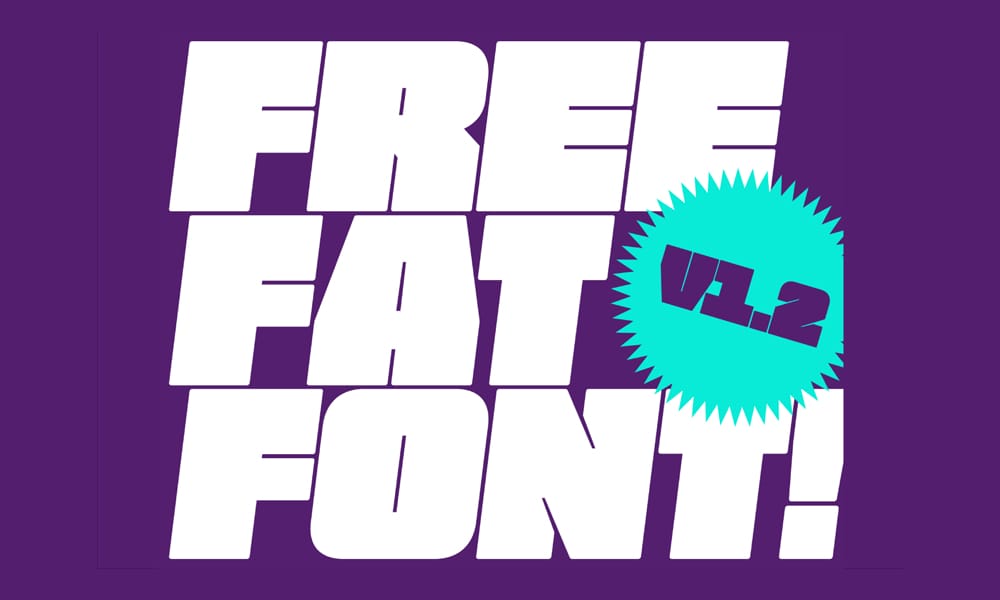
Free Fat Font is exactly what the name promises: extremely heavy, bordering on absurd, and meant for loud display work only. It’s the kind of font that turns a single word into a graphic element.
Key features:
- Ultra-heavy strokes that occupy a lot of visual space.
- Good for one-word headlines, logos, or typographic posters.
- Distributed by Pixel Surplus as a free design asset.
Best for: Music, streetwear, or any culture-focused design that embraces maximalism.
Pricing block (FREE):
— Cost: Free
— Main Limitations: Practically unusable for more than 2–3 words; legibility drops quickly.
— Best for: One-word logos and strong typographic posters.
— Last Updated: 2024.
Usage insight: If you’re stacking multiple lines of text, this is the wrong font—treat Free Fat Font as a logo or single-word tool.
Chatlong Font (FreeFontDL)
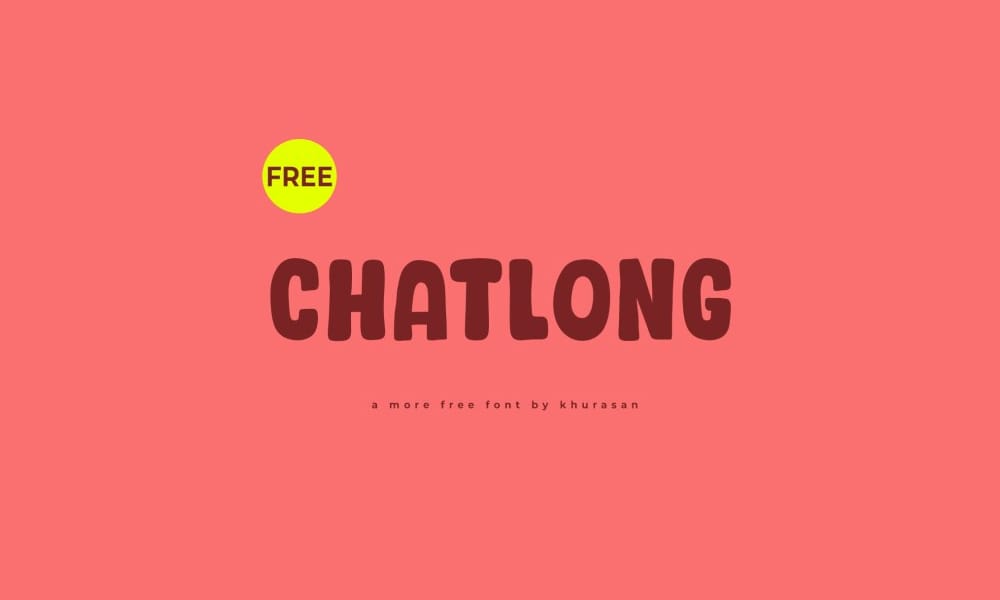
Chatlong is a heavy, elongated all-caps display face with an editorial feel. It works nicely for magazine-style headlines and promotional layouts where you want a sense of drama.
Key features:
- Heavy, tall letterforms.
- Designed for display-only, not text.
- Available from free font directories (license must be checked).
Best for: Editorial covers, full-bleed hero headlines, and campaign visuals.
Pricing block (FREE / CHECK LICENSE):
— Cost: Free
— Main Limitations: Only really works in all caps; mixed-case text feels unbalanced.
— Best for: Single-line headlines and large titles.
— Last Updated: 2024 directory listings.
Usage insight: Because of its height, give Chatlong more vertical breathing room than usual—tight spacing makes it feel cramped fast.
Sniglet Font (The League of Moveable Type)
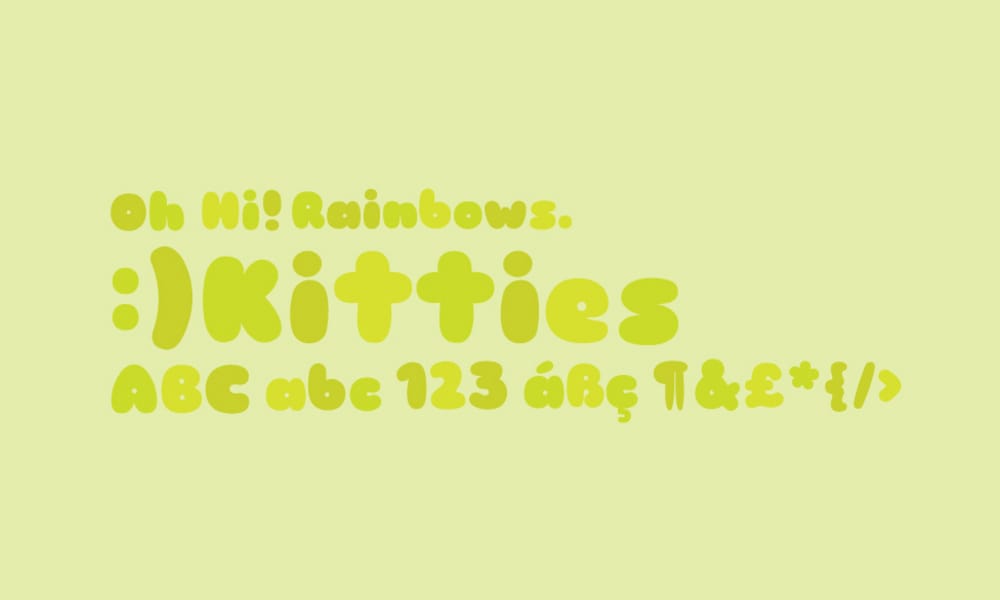
Sniglet is a bold, rounded display type that leans fully into fun. Think kids’ branding, party posters, or cheerful app screens rather than serious content.
Key features:
- Bold, blobby shapes with a big personality.
- Open-source from a respected indie foundry.
- Excellent for big, playful headings.
Best for: Kids’ products, festivals, playful brand moments.
Pricing block (FREE):
— Cost: Free
— Main Limitations: Too informal for most brands; easily overused.
— Best for: Specific, playful applications—not a general-use font.
— Last Updated: 2023–2024.
Usage insight: Sniglet works best with very simple color palettes; if everything else is loud, the font’s softness gets lost.
Motley Forces Font (Fontspace Page)
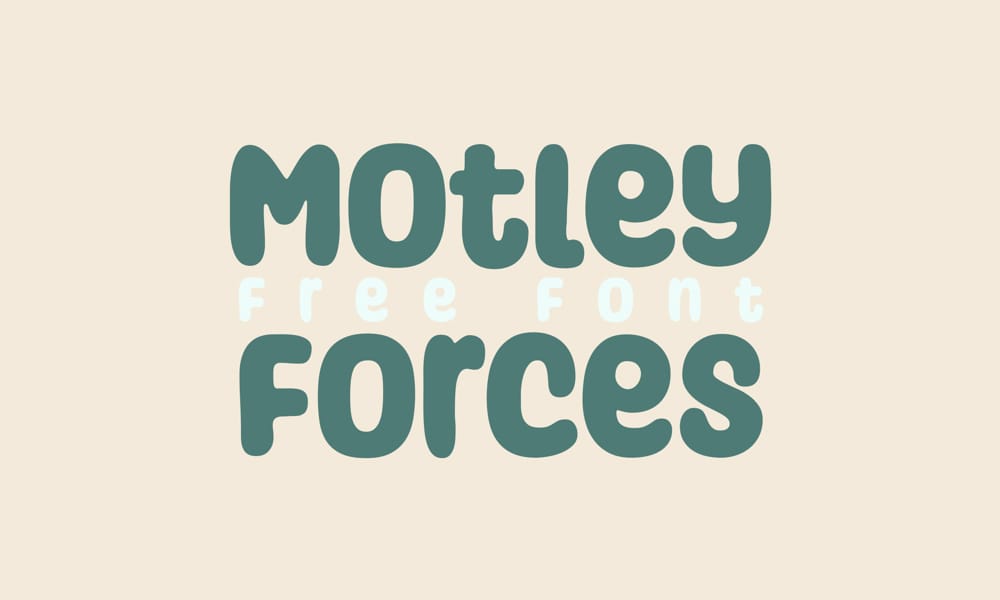
Motley Forces is a bold, characterful display font used mostly in illustrative and poster work. Its irregularities make it feel hand-crafted.
Key features:
- Bold, somewhat rough letterforms.
- Works with illustration-heavy layouts.
- Available through free font directories.
Best for: Band posters, comic-style layouts, and illustrative spreads.
Pricing block (FREE / CHECK LICENSE):
— Cost: Free
— Main Limitations: Poor fit for clean, grid-based UI.
— Best for: Posters and covers with illustration.
— Last Updated: 2024 in common directories.
Usage insight: Use Motley Forces where the illustration is doing most of the work and you just want the type to echo that energy.
Sobear Font
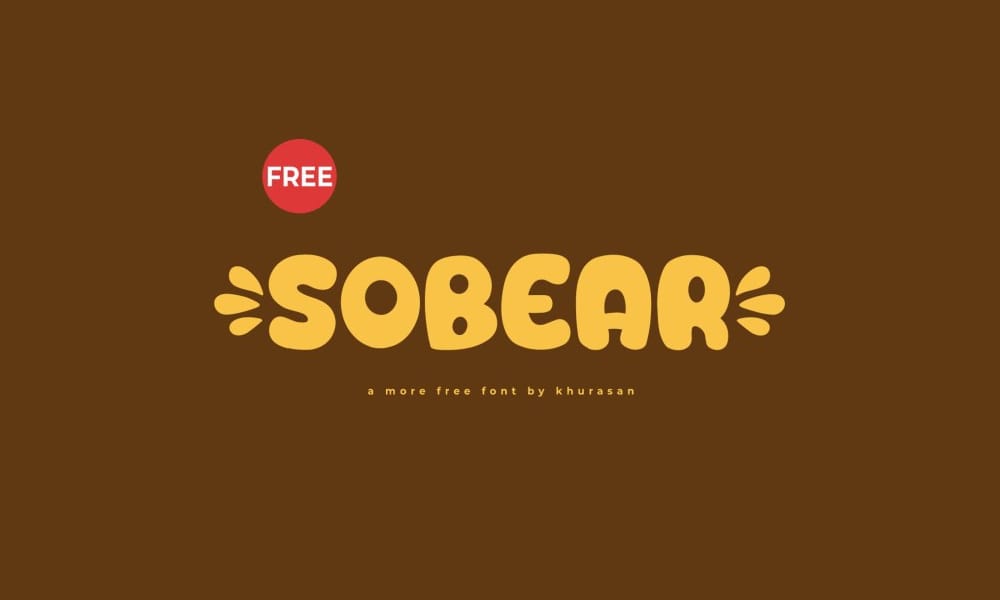
Sobear is a heavy display face often seen in kids’ or playful contexts, with chunky, soft shapes. It feels friendly and slightly naive in a way that works for certain verticals.
Key features:
- Thick strokes with friendly curves.
- Aimed at casual or youth-focused designs.
- Hosted on free font repositories.
Best for: Kids’ posters, playful banners, or toy brand visuals.
Pricing block (FREE / CHECK LICENSE):
— Cost: Free
— Main Limitations: Limited versatility; too informal for most client work.
— Best for: Niche, playful projects.
— Last Updated: 2024.
Usage insight: Sobear can be a good “one-off” campaign font, but avoid embedding it too deeply into a long-term brand unless that playful tone is core.
Koulen Font (GitHub / Google Fonts)
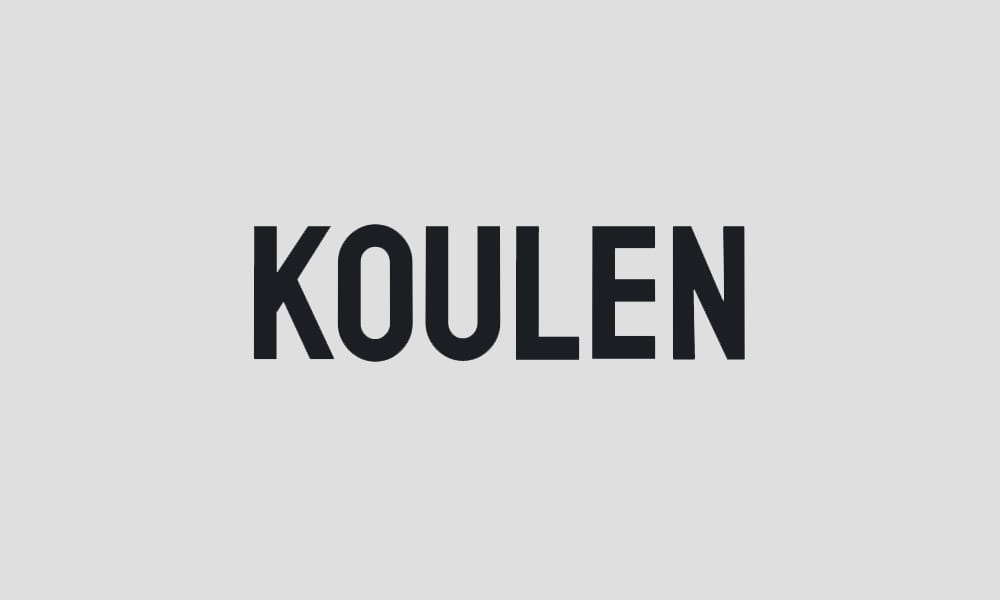
Koulen is a bold display type with origins in Khmer script aesthetics, giving Latin text a distinct, blocky flavor. It’s heavy, tall, and eye-catching, best used in short uppercase headings.
Key features:
- Bold weight intended for display.
- Distinctive cultural flavour in its forms.
- Open license via GitHub/Google Fonts.
Best for: Posters, cultural events, and titles where you want something different from Western geometric sans.
Pricing block (FREE):
— Cost: Free
— Main Limitations: Strong personality; mismatched in minimal or corporate UI.
— Best for: Posters, cultural campaigns, and short titles.
— Last Updated: 2023–2024.
Usage insight: Use Koulen sparingly and keep supporting typography extremely simple to avoid stylistic clashes.